
Home › Eloping in Ireland › Northern Ireland elopements › Planning the day
Planning guide
Planning a Causeway Coast elopement day
Seasons, light windows, weather, clothing and a sample eight-hour timeline — the practical detail that decides how a day on this coast actually feels.
Written by David Duignan · Last reviewed 10 September 2026
The short version
- Best months: May, September and early October. Winter is the underrated one.
- Best ceremony time: late afternoon, finishing into golden hour. Avoid midday from May to September.
- Coverage: six to eight hours, three to five locations.
- Base yourselves: Bushmills, Portballintrae, Portrush or Ballycastle.
- Plan around wind, not rain. Rain passes. Wind decides which direction a location can face.
When to come
There isn’t a bad month on this coast, only trade-offs. Here’s how they actually play out.
| Season | What you get | Watch out for |
|---|---|---|
| March–May | Vivid green, evenings stretching out, quiet locations, dramatic skies | Cold snaps; the North West 200 road races close roads around Portrush in mid-May |
| June–August | Warmest weather, sunset past 10pm in high summer | Busiest months; kitchens shut before you finish shooting; accommodation books out early |
| September–October | Long golden light without the crowds, richer colour, moodier weather | Evenings shorten quickly through October |
| November–February | Low sun all day, empty coastline, the most atmospheric conditions of the year | Short days, cold, and genuinely wild weather at times |
If your dates are open and you want a straight answer: late September. You get summer light, autumn colour and roads you can actually drive on.
Two dates to check before booking flights. Mid-May brings the North West 200 road races, which close public roads between Portrush, Portstewart and Coleraine and fill every bed for miles. The 11th and 12th of July is a significant period in Northern Ireland with bonfires, parades and road closures across the region. Neither makes a wedding impossible; both make the logistics around it harder than they need to be.
Timing the day around light
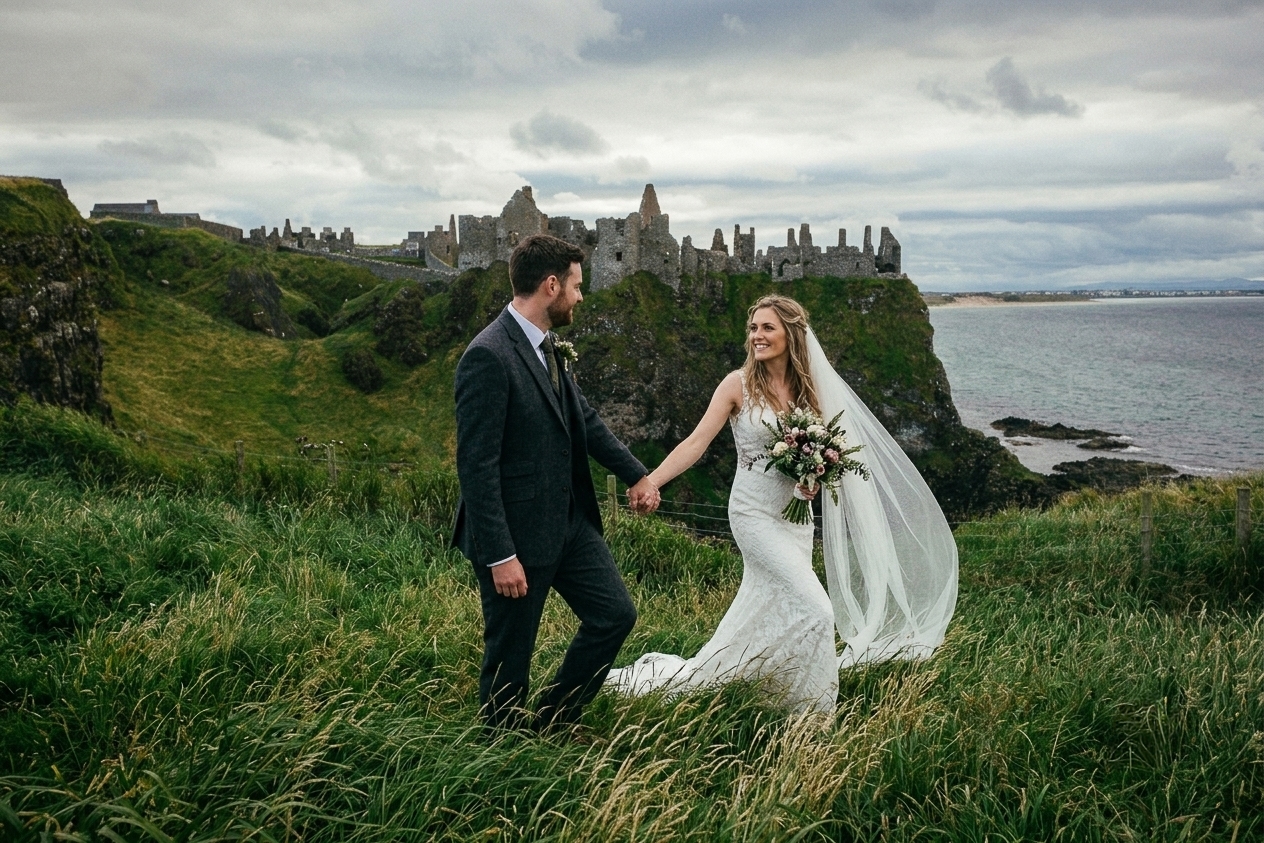
The single decision that changes the photographs most is what time the ceremony starts, and most couples default to the wrong answer because it feels sensible. Getting ready in the morning and marrying at noon is logical. It’s also the harshest light of the day and the busiest hour on the coast.
Sunrise
Almost total privacy, even at locations that are heaving by lunchtime, and light that is low, warm and directional. It costs you an alarm at four in the morning and it asks the same of every supplier. When couples commit to it, the pictures are consistently the strongest I make.
Late afternoon into golden hour
The default for good reason. Visitor numbers thin out after four, the light improves for the rest of the evening, and the day builds naturally towards the ceremony instead of peaking at breakfast. In June that golden window can run from eight until almost ten.
Blue hour
The twenty or thirty minutes after the sun has gone, when the sky holds an even glow and there are no shadows at all. Worth staying out for. It produces a completely different mood at a location you photographed an hour earlier.
A note on winter light
From November to February the sun never gets high, which means the quality of light you chase for one hour in July is available for most of the day. Short days sound like a limitation and are actually a gift: everything happens earlier, you’re not shooting until ten at night, and you can be in a warm pub by six.
Weather, and how to plan with it
Couples worry about rain. Rain is rarely the problem. Atlantic systems move fast here, so a downpour usually clears within twenty minutes and leaves behind saturated colour, mist in the valleys and light breaking through cloud — which is the atmosphere people come here hoping for, whether or not they’d have described it that way.
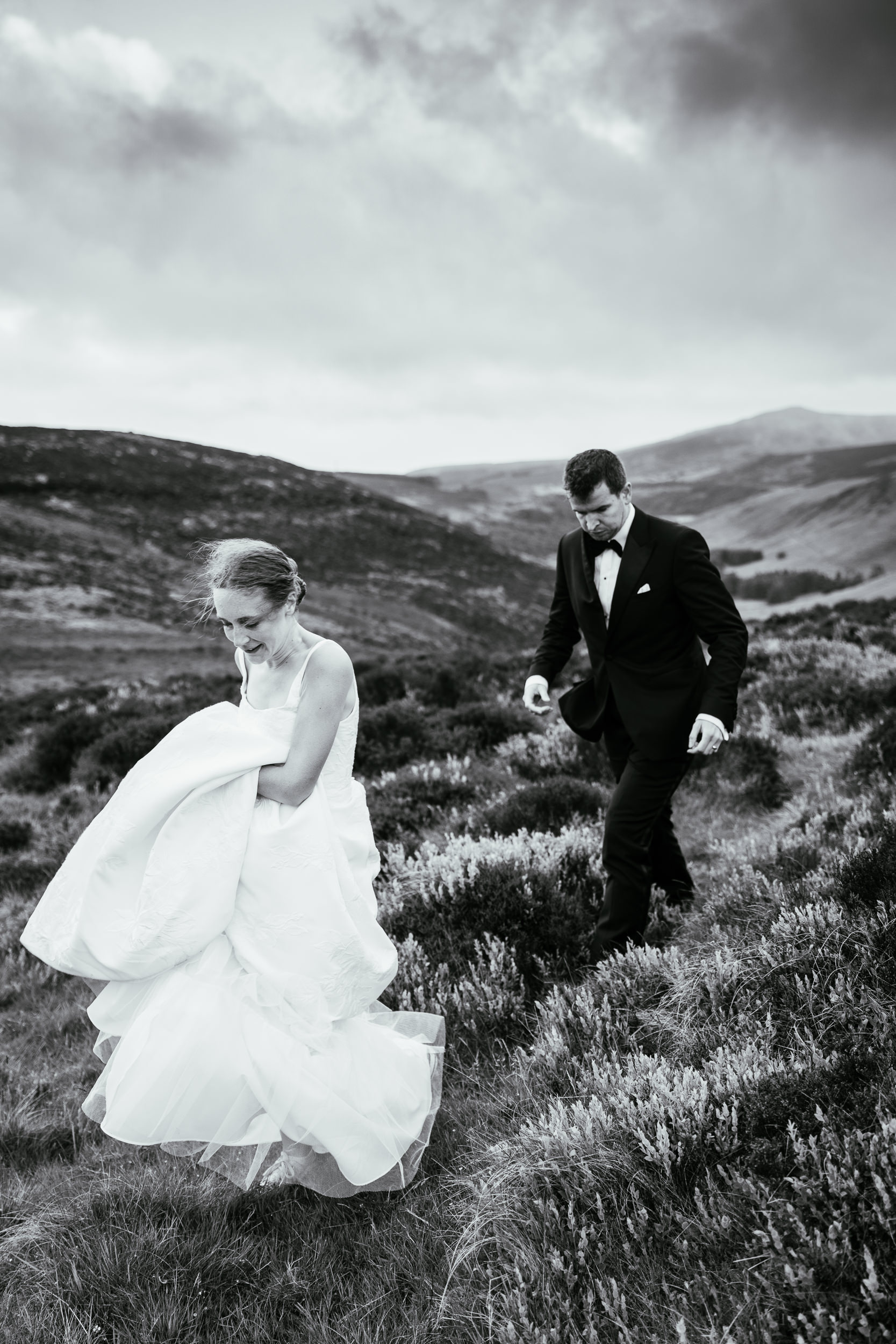
Wind is the real variable. It affects veils, loose bouquets, hair, whether a celebrant can be heard, and above all which direction a ceremony can face. Every decision I make on the day starts with wind direction, then light, then crowds.
What that means practically: the plan is one location you’re certain about, and five or six alternatives held loosely. If conditions turn, we move — and I’d rather make that call for you than hand you a forecast and ask you to decide something on your wedding morning.
What to wear
Shoes first
Everything follows from this. Paths are grass, rock and steps, and often wet. Boots with grip for the walking, and swap into whatever you actually want to wear once you’re standing where the ceremony is. White hiking boots have become a genuinely common choice for brides here and they photograph well.
Fabric over structure
Chiffon, tulle and anything with drape come alive in coastal wind in a way no studio can replicate. Heavy satin fights it, shows every mark and reads stiff against this landscape. A long train will pick up evidence of where it’s been, which usually makes the photographs better rather than worse.
Suits
Earth tones sit better against grey stone and green cliff than black does — browns, rust, deep green, camel. Tweed genuinely belongs here. Wool from September onwards; linen if you’re lucky with July.
Warmth
Thermals from October through April, hand warmers in a bag, and a wool wrap or an Aran knit that you’ll be happy to have in the pictures. Being cold is the fastest way to stop enjoying an otherwise perfect evening on a headland.
Veils
Beautiful for a handful of frames and a liability for the rest of the day. If you want one, plan to have it off after the ceremony. A cape or overskirt gives you the same movement without the drama.
A sample eight-hour day
| Time | What’s happening |
|---|---|
| 1:30pm | Hair and makeup finishing at the cottage |
| 2:30pm | I arrive — details, getting ready, quiet moments |
| 3:30pm | White Park Bay, first look on the beach |
| 4:30pm | Ceremony in the valley below Dunseverick Castle |
| 5:15pm | Portraits on the headland, then Dunseverick Falls |
| 6:00pm | Ballintoy Harbour — food, and a proper sit down |
| 7:00pm | Kinbane Head for the last of the light |
| 8:15pm | Blue hour, then finish |
Note the gaps. A timeline with no slack in it is a timeline that breaks the first time something interesting happens, and the interesting things are usually the point.
Where to base yourselves
Where you sleep affects the day more than most people expect, because it decides how long the morning takes and how far you travel in wedding clothes.
- Bushmills / Portballintrae — five minutes from Dunluce and the Causeway. The simplest base for a relaxed morning.
- Ballycastle — closest to Kinbane, Murlough Bay and the eastern half of the coast.
- Portrush — the most options for food and drink afterwards.
- Cushendun — quieter, further east, and worth it if you want the glens as well as the coast.
A cottage or a well-chosen rental usually beats a hotel room for the first hour of photographs: bigger windows, more room, and somewhere that looks like the place you’re in rather than anywhere.
Guests, and what changes
Most elopements here are two people. Some are two people and a handful of others, and that’s fine — but it changes three things. It narrows the location list, because a couple can go where a group of twelve can’t. It slows every transition, so the same day covers fewer places. And it shifts the feeling, which is worth knowing rather than discovering.
None of that is an argument against it. Tell me the number early and the day gets built around it properly.
Common questions
What’s the best month to elope on the Causeway Coast?
May, September and early October give the best balance — long enough evenings, softer light than midsummer, and far fewer people than July and August. If you don’t mind the cold, winter has the most beautiful light of all because the sun never climbs high.
What time of day should the ceremony be?
Late afternoon, timed so the ceremony finishes as golden hour starts. Midday is the worst choice from May to September: the light is hard and the coast is at its busiest. In winter, almost any daylight hour works.
How many hours of coverage do we need?
Six to eight for a full day. Anything under four turns into a ceremony and a rush, which is the opposite of the reason most people elope.
What happens if the weather is bad?
We change the plan, usually the day before or the morning of. Rain here passes; wind is the thing that actually dictates decisions, because it determines which direction a location can face.
What should we wear?
Layers, and boots for anything involving a path. Flowing fabric photographs far better than structured satin in coastal wind. Bring a warm outer layer whatever the month — the clifftops are colder than the forecast suggests.
Where should we stay?
Bushmills or Portballintrae for proximity to Dunluce and the Causeway, Ballycastle for the eastern locations, Portrush if you want restaurants and a bit of life afterwards. Somewhere with good windows matters more than star rating.
Should we bring a videographer as well?
If the budget allows, yes — video captures the sound of the vows and the sea, which stills can’t. I work regularly alongside videographers and can suggest people I trust.
How long should the trip be?
Arrive at least two days early to shake off the flight and see the coast before it’s your wedding day, and leave a full day afterwards. Flying home the morning after is a miserable end to a good week.
Let’s build your day around the light
Send me a date and I’ll tell you what the light does that week, which locations suit it, and what I’d plan around.
Check my availability