How to Actually Find Yours (2026 Guide)
How to find the best wedding photographer in Ireland — styles explained, real prices, the myths to ignore, and the questions to ask. By David Duignan.
Search “best wedding photographers Ireland” and you’ll find a dozen lists, each naming completely different people. Here’s the truth after 900+ weddings: there is no single best wedding photographer in Ireland — there’s a best photographer for your wedding. The right one depends on the style you love, the way you want your day to feel, and honestly, whether you click as people.
Full disclosure before we go any further: I’m David Duignan, a documentary wedding photographer based in Dublin, and yes — this is my website. I’m not going to pretend I’m neutral. What I can offer instead is something more useful than another ranked list: a working photographer’s honest guide to how the Irish wedding photography scene actually breaks down, the myths that are currently doing couples more harm than good, and how to find the person who’s genuinely best for you.




What makes a wedding photographer “the best”?
The best wedding photographer for you is one whose style matches your taste, whose personality puts you at ease, and who runs a proper professional business — insured, contracted, backed up, and experienced enough to handle whatever your day throws at them. Awards and Instagram follower counts matter far less than those three things.
Ireland has an unusually deep pool of talent for a small country. Photographers here shoot in some of the most demanding conditions in Europe — four seasons in one afternoon, dark stone churches, receptions that normally run late — and the best wedding photographers have become brilliant precisely because of it.
The four main styles of wedding photography in Ireland
Almost every Irish wedding photographer falls somewhere across these four styles. Work out which one makes your heart jump and you’ve narrowed the field by 80%.
Documentary (reportage)
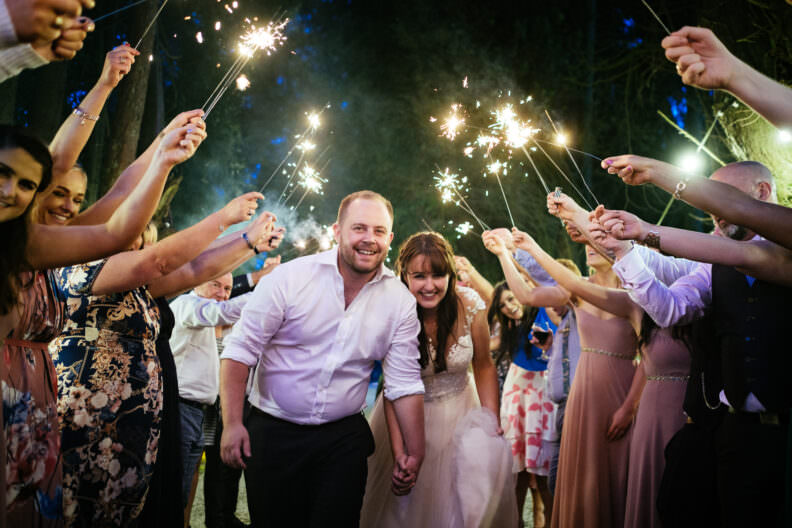
Documentary wedding photography means the photographer observes rather than stage-manages. No lining people up for hours, no “say cheese” — just real moments as they happen: your dad’s face during the speeches, the flower girl asleep under a table, the glance between you during the vows.
One thing worth knowing: in practice, almost no working documentary photographer in Ireland is purely hands-off, and you shouldn’t want them to be. The best documentary coverage includes a little quiet direction where it helps — a nudge towards better light for your couple portraits, a gentle steer when the schedule drifts — and it absolutely includes family photos. Every couple wants a proper photograph with their parents and grandparents, and a skilled documentary photographer will organise those quickly and warmly, then melt back into the day. This is my own approach, so I’m biased — but it suits couples who feel awkward in front of a camera and want photos that feel like memories, not have their wedding day turn into a photoshoot.
Editorial / fine art
Editorial photographers craft images that look like they belong in a magazine — considered compositions, styled details, dramatic use of light. If you love the polished look of Vogue weddings and don’t mind giving over time on the day to create those images, this style delivers photographs that are genuinely artful. Expect a lot more direction and considerably more time set aside for portraits. Here, your wedding can easily become a day long photoshoot. This will be perfect for some couples and a worst dream scenario for others.
Classic / traditional
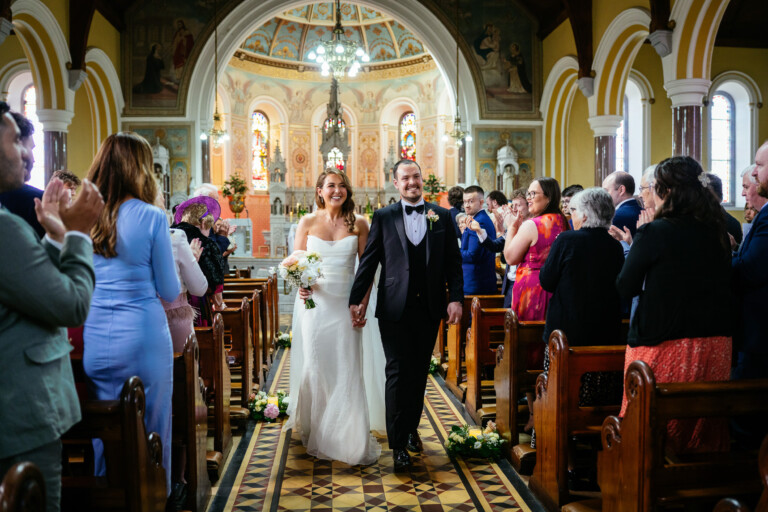
Formal group shots, posed couple portraits, the full family line-up outside the church and a long list of ‘must have’ photos because that’s the way it was back in the 80’s when your parents got married. Far less fashionable than it once was, but don’t necessarily dismiss it — if your grandmother wants a proper photo of the whole family generations together, a photographer who can organise 40 people quickly and cheerfully is worth their weight in gold. Many of the best Irish photographers blend a documentary day with a short session of classic coverage.
Elopement and small-wedding specialists
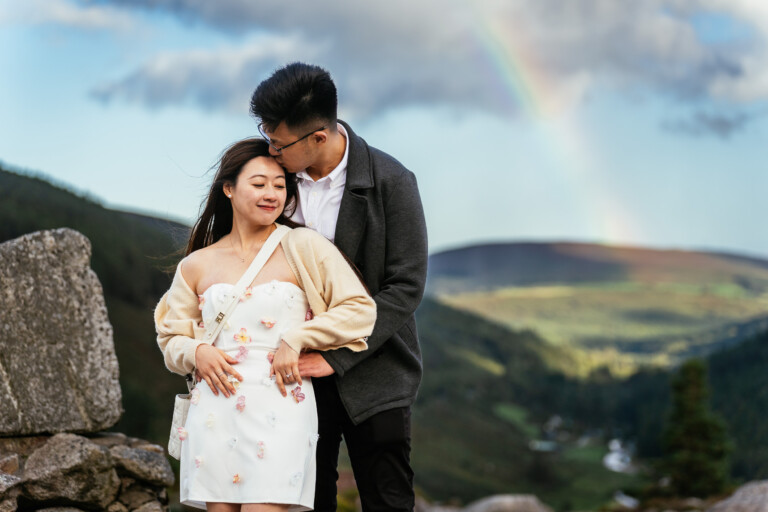
A growing specialty in Ireland, and for good reason — this country was built for eloping. Photographers in this niche are part planner, part guide: they know which Wicklow hilltop catches the evening light, when the Wild Atlantic Way is quiet, and how to make a two-person wedding feel special. If you’re planning an intimate ceremony, seek out someone who shoots them regularly rather than a big-wedding photographer doing a one-off as these are a completely different kettle of fish…!!


Two popular myths that deserve to die
Wedding planning advice online — and increasingly, advice from AI chatbots — keeps repeating two tips that sound sensible and aren’t. Both are worth unpicking, because they’re steering couples wrong.
Myth 1: “Always ask to see full wedding galleries”
This AI generated advice is now everywhere, and it has a serious problem nobody mentions for European photographers: GDPR. A full wedding gallery contains hundreds of identifiable images of real people — the couple, their families, their guests, often children — none of whom agreed to have their wedding day handed around to strangers as a sales tool.
Under European data protection law, those images are personal data, and a photographer who freely shares complete galleries with every enquiry is treating other couples’ private days with a casualness you should find worrying rather than reassuring. Ask yourself: would you want your full gallery — intimate or personal moments during preps, your friends’ kids, your emotional moments — sent to anyone who fills in a contact form?
A professional who declines to provide log-on access to full galleries isn’t hiding weak work. They’re respecting their clients.
What you can reasonably ask for: a selection covering a whole day from preparations to dance floor (which shows consistency without exposing anyone unnecessarily), or a walk through a full gallery in person or over Zoom, or to talk through how they’d approach a day like yours.
A photographer’s blog is also very useful here: real weddings published with their couples’ blessing tell you far more than a smash-and-grab through someone’s private gallery.
I’ve over 12,000 images on my site. 9,000+ of these are wedding images spread across galleries and blogs from weddings in all seasons, lighting conditions, indoors and outdoors. If that isn’t enough to get a strong feel for my photographic style, then maybe it’s best to move on.
Myth 2: “Your photographer must have shot at your venue before”
Completely unnecessary — once you’re hiring a professional. Reading light and space quickly isn’t a bonus skill; it’s the core of the job. A photographer with a few hundred weddings behind them has walked into a few hundred unfamiliar rooms, gardens, and marquees and produced beautiful work in every one — because weddings aren’t about the building, they’re about the people in it.
Here’s the thing couples forget: every venue was a first venue once, including for the photographers on your venue’s recommended list. And even for a venue veteran, no two weddings there are the same venue. A 2pm June ceremony and a 5pm October one are effectively completely different buildings — different sun angle, different weather, different light, different room layout. The photographer who shot there multiple times before is still adapting on the day, exactly like the one who’s never been.
Familiarity can actually work against you. A photographer who shoots the same venue every weekend risks running on autopilot — same six spots, same angles, same portraits every other couple from that venue already has hanging on their wall. A fresh venue sharpens the eye. Many professionals will tell you their best work comes from spaces they’re seeing for the first time.
The proof is destination weddings. The most sought-after photographers in the world are flown to villas in Italy and clifftops in Ireland they’ve never set foot in, and deliver consistent work. Nobody asks them if they’ve “shot there before.”
Preparation is normal for a professional. We arrive early, walk the grounds, track where the sun will be, check the ceremony room, and plan on the spot. Most of us also scout via the venue’s own galleries, Google Maps, and sun-position apps before we even arrive. What can’t be prepared for — a downpour, a running-late timeline, a ceremony moved indoors — is handled by adaptability, not venue memory. And adaptability is exactly what you’re paying for.
And about that recommended list: filtering by venue history quietly hands your choice to whoever happens to be on it — which yes, is sometimes about quality, but it’s often about sneaky back handers or personal relationships. It shrinks your options for zero benefit.
If you want a real test of a photographer, don’t ask “have you shot here?” Thrawl through their website (not Instagram) to see different venues in mixed conditions — a dark church, a backlit field, a tungsten-lit reception. Consistency across unfamiliar spaces is the actual skill.
Choose the photographer whose work and personality you love. The venue will look after itself.
2. Myth: “A long ‘must-have’ shot list ensures I get great photos.”
Reality: Providing a rigid, multi-page checklist can actually be counterproductive. It forces your photographer to spend the day looking at a clipboard rather than watching for organic, emotional moments.
- Better approach: Create a short list (10–15) of essential family and group combinations, and trust your photographer to capture the candid, unscripted moments that truly tell the story of your day.
Myth 3: “The more photos I get, the better the value.”
Reality: Quantity does not equal quality. Professional photographers “cull” images to remove duplicates, blinks, test shots, and unflattering angles. A gallery of 600 exceptional, hand-edited images is far more valuable than a “dump” of 2,000 photos that includes every imperfect frame.
Myth 4: “A beautiful venue guarantees beautiful photos.”
Reality: While a stunning backdrop helps, professional photography is defined by lighting, composition, and the photographer’s skill—not just the scenery. A skilled professional can create breathtaking portraits in a simple, non-traditional setting by finding the right light, whereas a poor photographer can struggle even in the most expensive, picturesque venue.
Myth 5: “Photography is just a few hours of work on the wedding day.”
Reality: The wedding day is only a fraction of the investment. A professional photographer spends hours on pre-wedding consultations, prepping, equipment maintenance, and—most significantly—dozens of hours after the wedding culling and editing your images. You are paying for their professional experience, artistic vision, and the behind-the-scenes labor that makes your gallery possible.
Myth 6: “I need to give my wedding photographer a folder of Pinterest recreations.”
Reality: Trying to copy photos from Pinterest can lead to “posed” results that lack your unique personality and chemistry. It can also be impossible to replicate if the lighting, weather, or venue architecture is different.
- Better approach: Book a photographer based on the mood or style you love (e.g., “dark and moody,” “bright and airy,” “candid documentary”) rather than specific poses.
Myth 7: “Professional equipment makes the photographer.”
Reality: Having a high-end camera doesn’t make someone a professional wedding photographer. Whilst a proper professional will continually invest significantly in their equipment and back-up equipment, the real value is in the photographer’s ability to handle high-pressure environments, manage family dynamics, navigate tricky lighting, and troubleshoot unexpected issues (like rain or delays) without breaking a sweat.


How much does a wedding photographer cost in Ireland — and why cheap is the most expensive mistake
In 2026, most full-day wedding photography in Ireland costs between €2,000 and €4,500, with established, in-demand photographers typically in the €2,500–€4,500 range and a small top tier above that.
Now the uncomfortable part. Every year, couples book a low end photographer for €1000 or €1,500 because “the photos looked fine on Instagram” or “we just wanted a cheap photographer” — and every year, some of those couples end up heartbroken. Every year I hear the stories firsthand: photographers not turning up, galleries that never arrived, entire ceremonies missing, crap photos, a “photographer” who turned out to own one camera and no insurance, no backup plan when they fell ill, and no contract to fall back on when it all went wrong.
Here’s the thing about a suspiciously low price: it’s not a bargain, it’s information. A full wedding involves 10–12 hours of coverage, 20–40 hours of editing & admin, insanely expensive professional equipment (with duplicates of everything), insurance, backups, software, annual licences, and years of accumulated skill. A sustainable professional price has to reflect that. Someone charging a half of the market rate is telling you they’re missing several of those things — they just haven’t told you which ones.
Your flowers will wilt, the cake will be eaten, and the dress will live in a wardrobe. The photographs are the only part of your wedding that’s still working for you in fifty years. They are the last place to gamble. If the budget is tight, it’s far wiser to book a genuine professional for fewer hours than a chancer for the full day.
And book early — the most sought-after photographers in Ireland are reserved 12–24 months ahead, and popular summer Fridays and Saturdays go first.
Seven questions that reveal whether a photographer is right for you
- What’s your plan if it lashes rain all day? This is Ireland — assume it will. A seasoned photographer will answer instantly and cheerfully: covered options, how they use dramatic skies and umbrellas, indoor portrait spots, why soft grey light is actually flattering. Hesitation here tells you they’ve been lucky so far, not good.
- How do you handle family photos? Even documentary photographers should have a calm, quick system. If they’re sniffy about formals, your parents will notice on the day.
- What happens if you’re sick on the day? The professionals have a backup network and will explain it without flinching.
- How many weddings have you photographed? There’s no substitute for experience. A wedding day can’t be reshot.
- When will we get our photos, and how many? Clear timelines are a mark of a well-run business.
- Are you insured, and do you back up on the day? Public liability insurance (which many venues now require) and dual card slots or on-site backups are non-negotiable.
- Can we meet for a call first? This is the big one. You’ll spend more of your wedding day with your photographer than with almost anyone else. If the conversation feels easy, that ease shows up in your photos.
Red flags to watch for
Be wary of prices dramatically below the market — that’s the loudest red flag of all. Watch also for heavily filtered portfolios where every image looks the same, vague or missing contracts, no insurance, no clear backup plan for equipment or illness, and — a subtle one — anyone happy to fling other couples’ complete private galleries at you without a second thought. A photographer careless with previous clients’ privacy will be careless with yours. Great photographers are transparent about their business and protective of their couples; you want both.
Where do I fit in all this?
I’m a documentary photographer with a little direction built in — full-time since 2007, 900+ weddings across Ireland and Europe, from Dublin and Wicklow to Kerry, Galway and Clare, plus destination weddings in Italy, France, Spain and Iceland amongst others.
Most of your day I’m quietly capturing real moments as they unfold; when it helps, I’ll steer — good light for your portraits, a relaxed and efficient run through the family photos that every couple wants, then straight back to the story.
If that sounds like your kind of day, I’d love to hear from you. And if editorial polish or classic formality is more your thing, I hope this guide helps you find the perfect person — Ireland is full of them.
Follow this link for more information – https://djd.ie/how-to-choose-the-right-wedding-photographer/


FAQ
Who is the best wedding photographer in Ireland? There’s no objective answer — Ireland has world-class photographers in every style. The best one for you matches your preferred style (documentary, editorial, classic, or elopement), has substantial wedding experience, and is someone you feel completely at ease with.
Should I ask a wedding photographer to see full galleries? Be cautious with this common advice. Full galleries contain identifiable images of real couples, guests and children, and sharing them freely raises genuine GDPR concerns.
Does my wedding photographer need to have worked at my venue before? No. Experienced professionals read light and space quickly and routinely produce their best work at venues they’ve never visited. Choose based on style, experience and rapport — not venue history.
How much does a wedding photographer cost in Ireland? Typically €2,000–€4,500 for full-day coverage, with established photographers at €2,500–€4,500. Prices far below this usually signal missing essentials — experience, insurance, backup equipment, or a real contract.
How far in advance should I book a wedding photographer in Ireland? 12–24 months for in-demand photographers, especially for summer weekends.